Blog
Armenia and China Sign Agreement on International Road Transport: What It Means for Freight Logistics
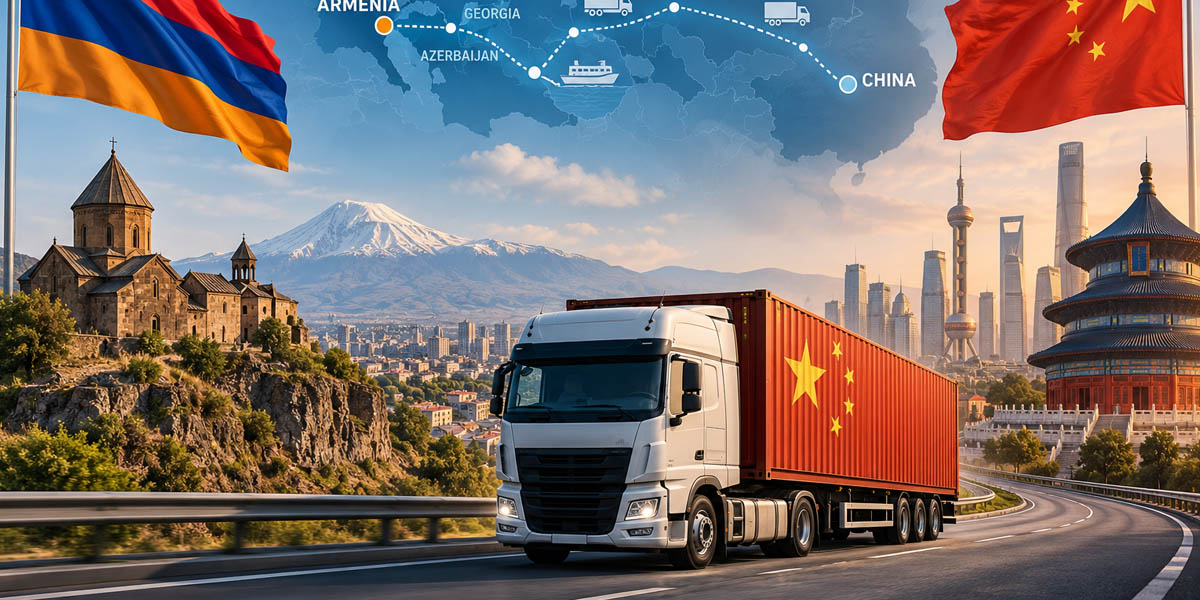
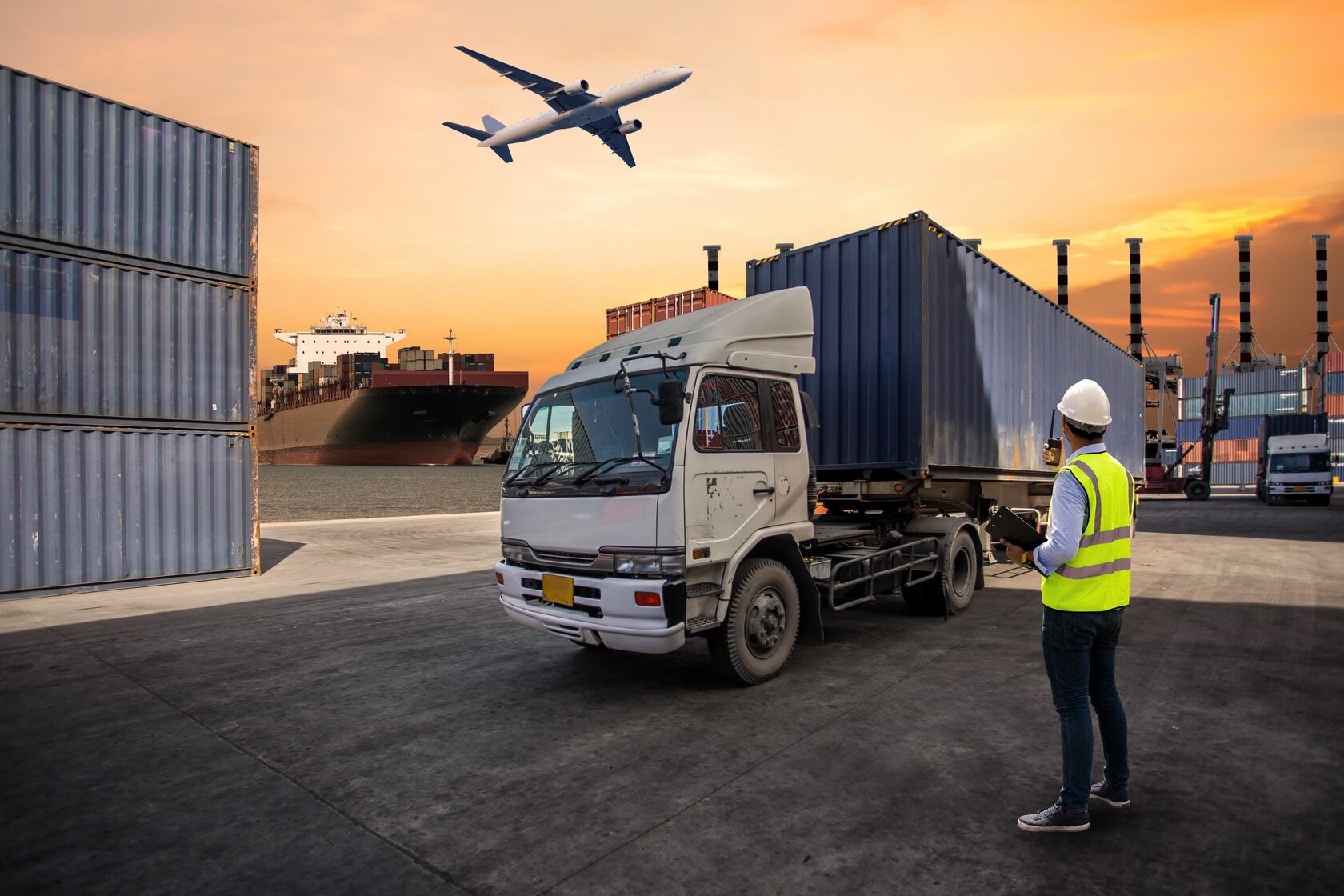
On September 22, 2026, Armenia and China signed an intergovernmental agreement on international road transport of passengers and goods. The agreement is intended to create a clearer legal framework for road transport between the two countries, simplify a number of procedures for carriers, and support the development of bilateral trade.
The agreement was signed on behalf of Armenia by Deputy Minister of Territorial Administration and Infrastructure Kristine Ghalechyan during a high-level meeting in Beijing dedicated to the development of the Trans-Caspian International Transport Route.
For Armenian businesses, the agreement is particularly relevant from a practical perspective. China remains one of Armenia’s major trading partners and suppliers, so any mechanism that can make overland logistics more predictable and reduce administrative costs may be important for importers.
What Does the New Agreement Provide?
The agreement regulates international road transport of passengers and goods between Armenia and China, as well as transit operations.
One of its key provisions is the introduction of a special permit system that will be mutually recognized by both countries.
Two categories of permits are expected:
- permits for standard freight transport;
- permits for special cargo.
This should create a more structured and predictable framework for carriers operating between the two countries.
At the same time, the agreement does not cover cabotage. In other words, a Chinese carrier will not be allowed to use such a permit to perform regular domestic transport between two locations within Armenia, and an Armenian carrier will not be able to perform domestic transport within China.
The agreement applies specifically to international and transit road transport.
Carriers Will Be Exempt From Certain Road Charges
Another important provision concerns transport-related costs.
The agreement provides for mutual exemptions from a number of road taxes, fees, and special charges associated with the use of road infrastructure.
However, this does not mean that all road-related payments will disappear.
Charges intended to compensate for damage caused to road infrastructure will remain in place. This may be particularly relevant for heavy or oversized vehicles.
In practice, the agreement may reduce part of the road-related costs associated with international transport, while preserving payments connected with excessive road wear or infrastructure damage.
Who Will Issue the Permits?
The competent authorities under the agreement are:
In Armenia - the Ministry of Territorial Administration and Infrastructure of the Republic of Armenia.
In China - the Ministry of Transport of the People’s Republic of China.
These authorities will be responsible for administering the permit system provided for under the agreement.
For busines
and logistics companies, the practical details will be particularly important: how permits will be issued, how long the process will take, and to what extent the procedures will be digitalized.
Why the Agreement Matters for Armenia–China Trade
China already plays an important role in Armenia’s foreign trade.
According to official Armenian government data, Armenia’s exports to China in 2025 amounted to approximately USD 763.6 million, while imports of Chinese-origin goods reached approximately USD 1.88 billion.
This means that the combined bilateral trade volume, based on these figures, was around USD 2.64 billion.
Armenia imports a wide range of goods from China, including:
- machinery and equipment;
- electronics and electrical goods;
- clothing and footwear;
- chemical products;
- construction materials;
- consumer goods;
- industrial components and other manufactured products.
This makes the development of additional transport mechanisms between the two countries relevant not only at the policy level, but also for Armenian importers dealing with regular commercial shipments.
Does This Mean There Will Be a Direct Armenia–China Road Route?
No.
The agreement itself does not create a new physical transport corridor and does not mean that trucks will be able to travel directly from China to Armenia without crossing other countries.
Armenia and China do not share a common border. Any overland road transport between them requires transit through third countries.
As a result, the efficiency of future road routes will depend not only on the bilateral Armenia–China agreement, but also on:
- the selected transit route;
- regulations in third countries;
- border procedures;
- customs requirements;
- transit permits;
- road infrastructure;
- current conditions at border crossings.
The new agreement primarily addresses the bilateral regulatory framework for road transport. It does not remove the legal or operational requirements of transit countries.
How Is the Agreement Connected to the Trans-Caspian Corridor?
The agreement was signed in Beijing during a high-level meeting focused on the development of the Trans-Caspian International Transport Route, also known as the Middle Corridor.
The meeting addressed issues such as:
- transport efficiency;
- infrastructure development;
- border and customs simplification;
- digitalization of logistics processes;
- growth of freight volumes.
The classic Trans-Caspian route connects China with Europe through Central Asia and the South Caucasus.
In simplified form, the corridor runs as follows:
China → Kazakhstan → Caspian Sea → Azerbaijan → Georgia → Turkey / Black Sea → Europe
The route combines rail, sea, and road transport. Key logistics points include Kazakhstan’s ports of Aktau and Kuryk, Azerbaijan’s port of Alat, and further transport connections through Georgia and Turkey.
Armenia is not currently located directly on the main route of the classic Middle Corridor.
For this reason, the Armenia-China road transport agreement should not be interpreted as Armenia automatically becoming part of the existing Trans-Caspian corridor. It is more accurate to view it as part of a broader effort to improve Armenia’s transport connectivity with China and with Eurasian logistics networks.
As regional transport links develop, road transport may complement existing rail, sea, and multimodal freight solutions.
Which Countries Participate in the Trans-Caspian Route?
The core countries involved in the main route include:
- China - a major origin and destination market for freight;
- Kazakhstan - the principal land section in Central Asia;
- Azerbaijan - the first major hub after crossing the Caspian Sea;
- Georgia - a transit country toward Turkey and Black Sea ports;
- Turkey - a major land connection toward Europe.
Depending on the specific logistics scheme, Turkmenistan, Romania, Bulgaria, and other European countries may also be involved.
The Middle Corridor is multimodal, meaning that a single container may travel by rail, ferry, rail again, and then road transport before reaching its final destination.
This is precisely why document standardization, digitalization, and simplified cross-border procedures are so important for the efficiency of the route.
Why Road Transport Still Matters
Even when most of the long-distance journey from China is carried out by rail or sea, road transport remains an important part of the logistics chain.
It may be used:
- from the supplier’s facility to a rail terminal;
- between warehouses and logistics hubs;
- on individual transit sections;
- after a container or shipment arrives in the region;
- for final delivery to the consignee’s warehouse.
For Armenia, road transport is especially important because the country is landlocked.
As a result, the development of a clearer legal basis for international road transport may expand the number of logistics combinations available for shipments from China.
What Could Change for Armenian Importers?
Once the agreement enters into force and the new mechanisms are fully implemented, businesses may gain several practical benefits.
A More Predictable Permit System
A bilateral legal framework and a system of mutually recognized permits should make the administrative side of road transport more structured.
Potential Reduction in Transport Costs
Exemption from certain road taxes and fees may reduce part of the carrier’s operating costs, although the final freight rate will still depend on transit countries, route choice, fuel costs, and other factors.
More Routing Options
Road transport may complement existing delivery schemes from China to Armenia, including sea, rail, and multimodal routes.
Greater Logistics Predictability
The more clearly permit and administrative procedures are coordinated, the easier it becomes for carriers and importers to plan international transport in advance.
However, the actual commercial effect of the agreement will become clearer only after the practical permit system is launched and regular transport operations begin.
What the Agreement Does Not Solve
It is important not to overstate the immediate impact of the new document.
The agreement does not eliminate all logistics challenges between Armenia and China.
Shipments will still depend on:
- transit countries;
- border crossing capacity;
- road infrastructure;
- customs procedures;
- product-specific certification requirements;
- permit rules along individual sections of the route.
The agreement also:
- does not allow cabotage;
- does not remove all road charges;
- does not eliminate customs procedures;
- does not create a direct border or dedicated road between Armenia and China;
- does not guarantee fixed delivery times.
For importers, it therefore remains essential to evaluate the entire logistics chain rather than only the bilateral regulatory framework.
What About Passenger Transport?
The agreement also covers passenger transport.
It allows for the possibility of regular and non-regular international bus services between Armenia and China.
Such services would need to operate along agreed routes and through designated border crossing points.
At this stage, this should be viewed primarily as a legal possibility rather than an already operating passenger route. Actual services would require specific routes, operators, transit arrangements, and further coordination.
A New Stage in Armenia–China Logistics
The agreement will not transform transport between Armenia and China overnight, but it creates a legal foundation for the further development of international road transport.
For Armenia, having multiple logistics options for trade with China is strategically important. Road, rail, sea, and multimodal transport can complement one another depending on cargo type, cost, urgency, and route conditions.
For businesses, the key practical value lies in the creation of an additional mechanism that may, over time, make freight transport between China and Armenia more predictable, structured, and competitive.
Cargo Express: Freight Delivery From China to Armenia
Cargo Express organizes international freight transportation from China to Armenia and helps businesses select logistics solutions based on cargo type, shipment volume, required delivery time, and route characteristics.
When planning a shipment, it is important to consider not only the cost of the main transport segment, but also:
- transit sections;
- customs requirements;
- HS code classification;
- required documentation;
- possible product restrictions;
- border procedures.
As the new road transport agreement between Armenia and China moves into practical implementation, additional road-based logistics mechanisms may also become part of the available routing options.